
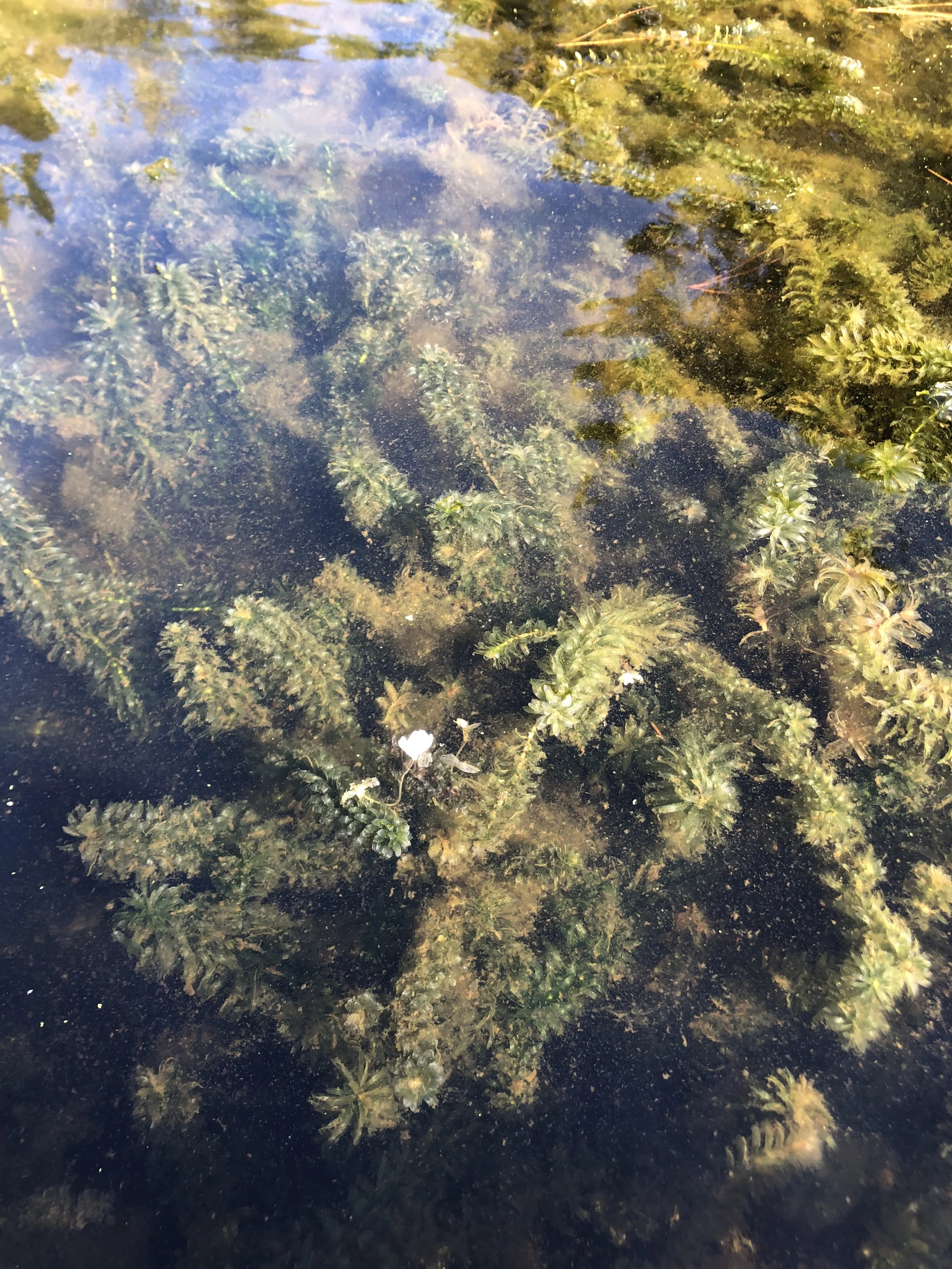
bacteria monitoring
Balance is the key to all systems in nature.
E. coli are a part of a healthy microbiome in the lower intestines of warm blooded animals, including humans, and it is common in the fecal matter (poop) of these creatures. High levels of E. coli in water samples can indicate contamination by fecal matter which can make people and other animals sick, deplete dissolved oxygen in the water, and create monopolies on space and nutrients called biofilms, that out compete most other microorganisms.
In 1972 the Clean Water Act set regulations for the discharge of pollutants into navigable waters, meaning waste water could no longer be directly deposited into waterways. However, issues with city sewer systems, public pit toilets, septic systems, or any other plumbing configuration can allow waste water to leech directly into rivers, streams, or lakes.
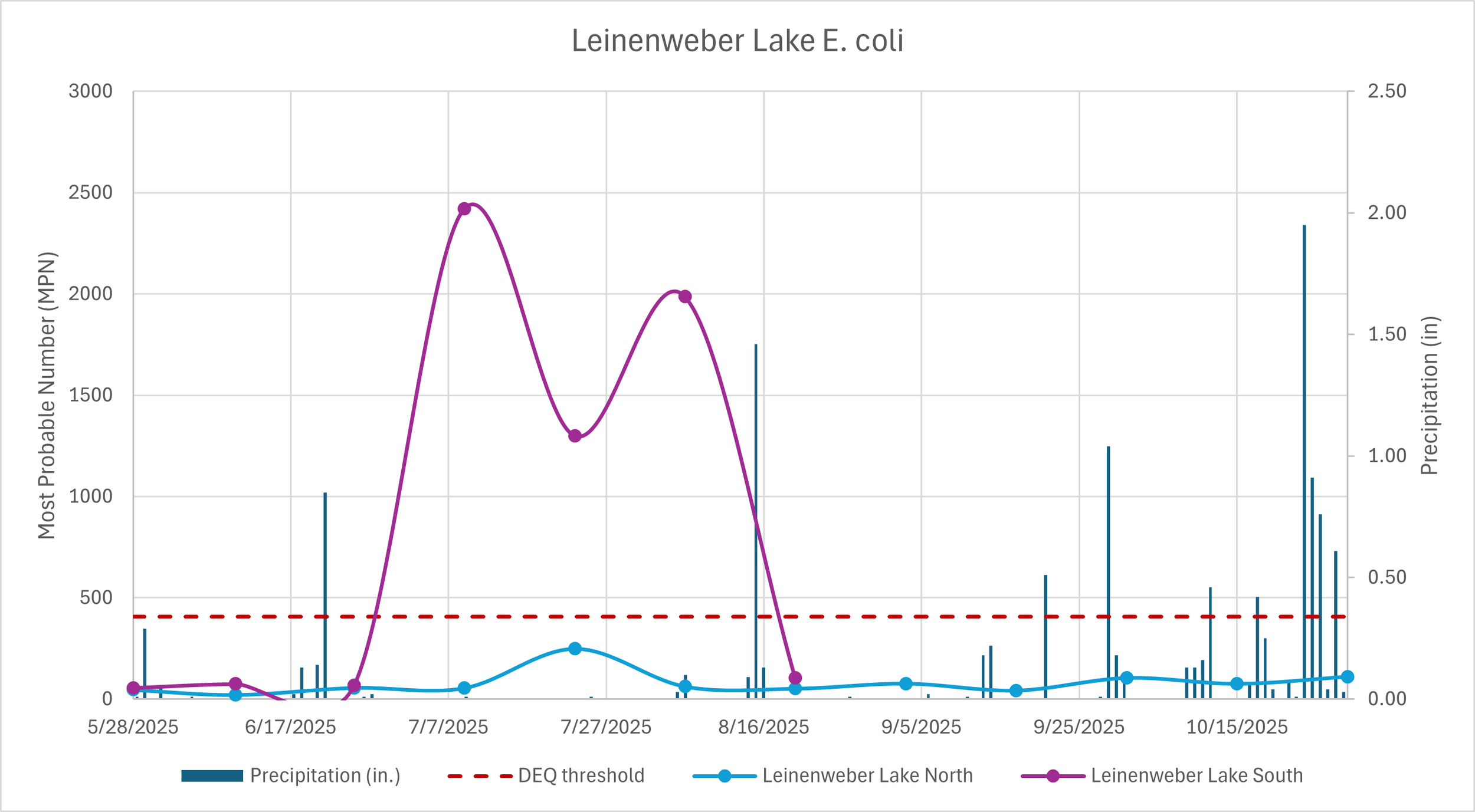
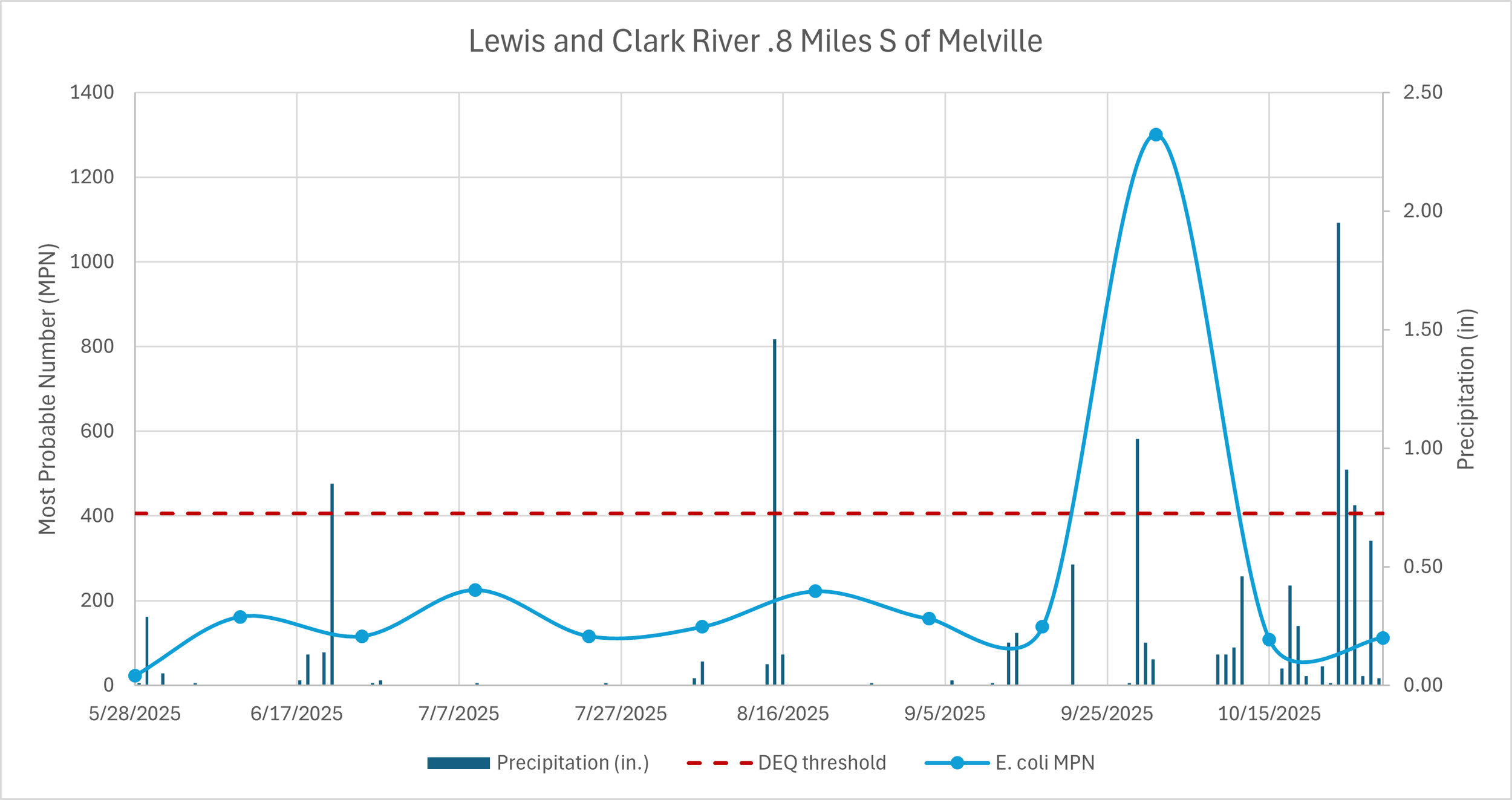
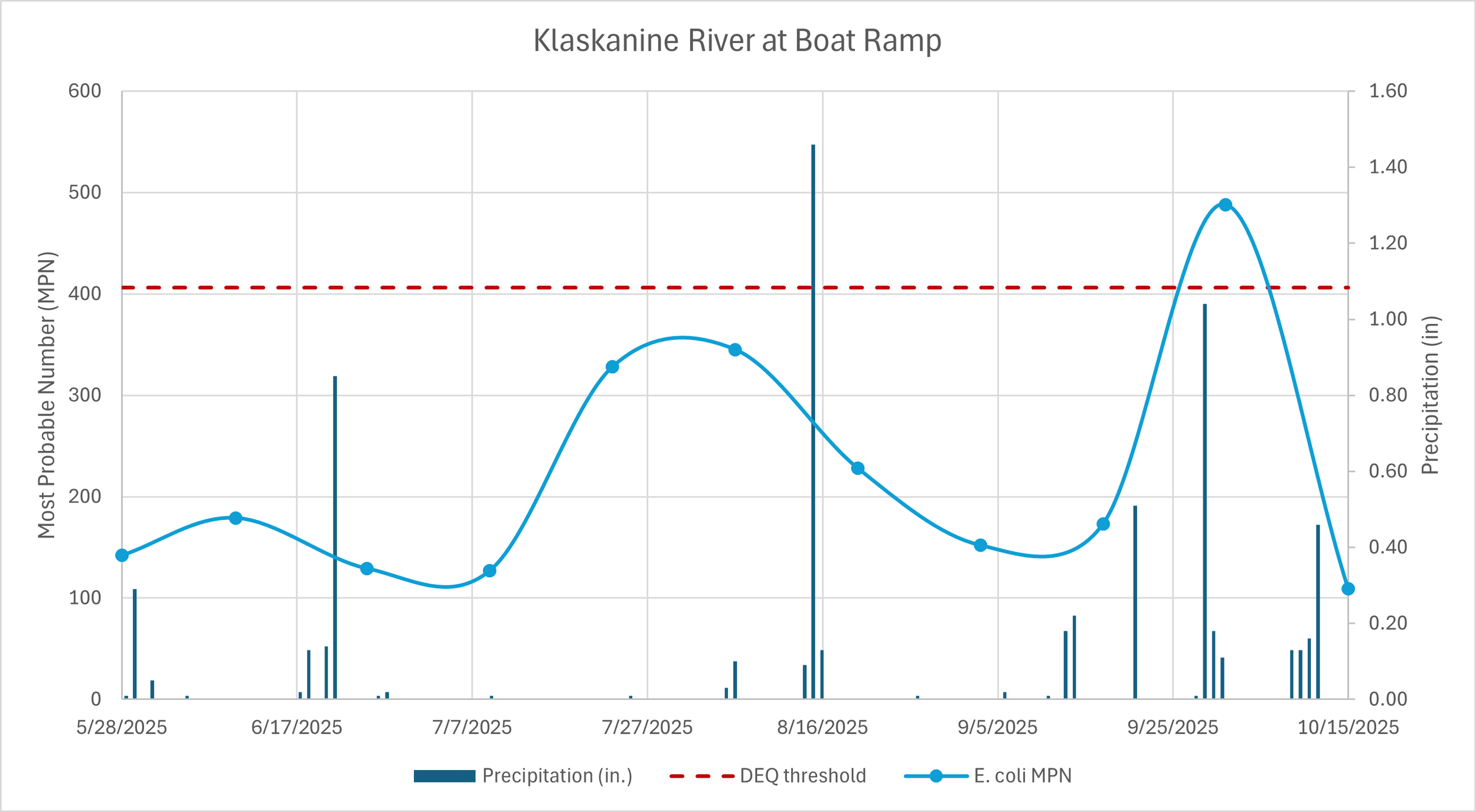
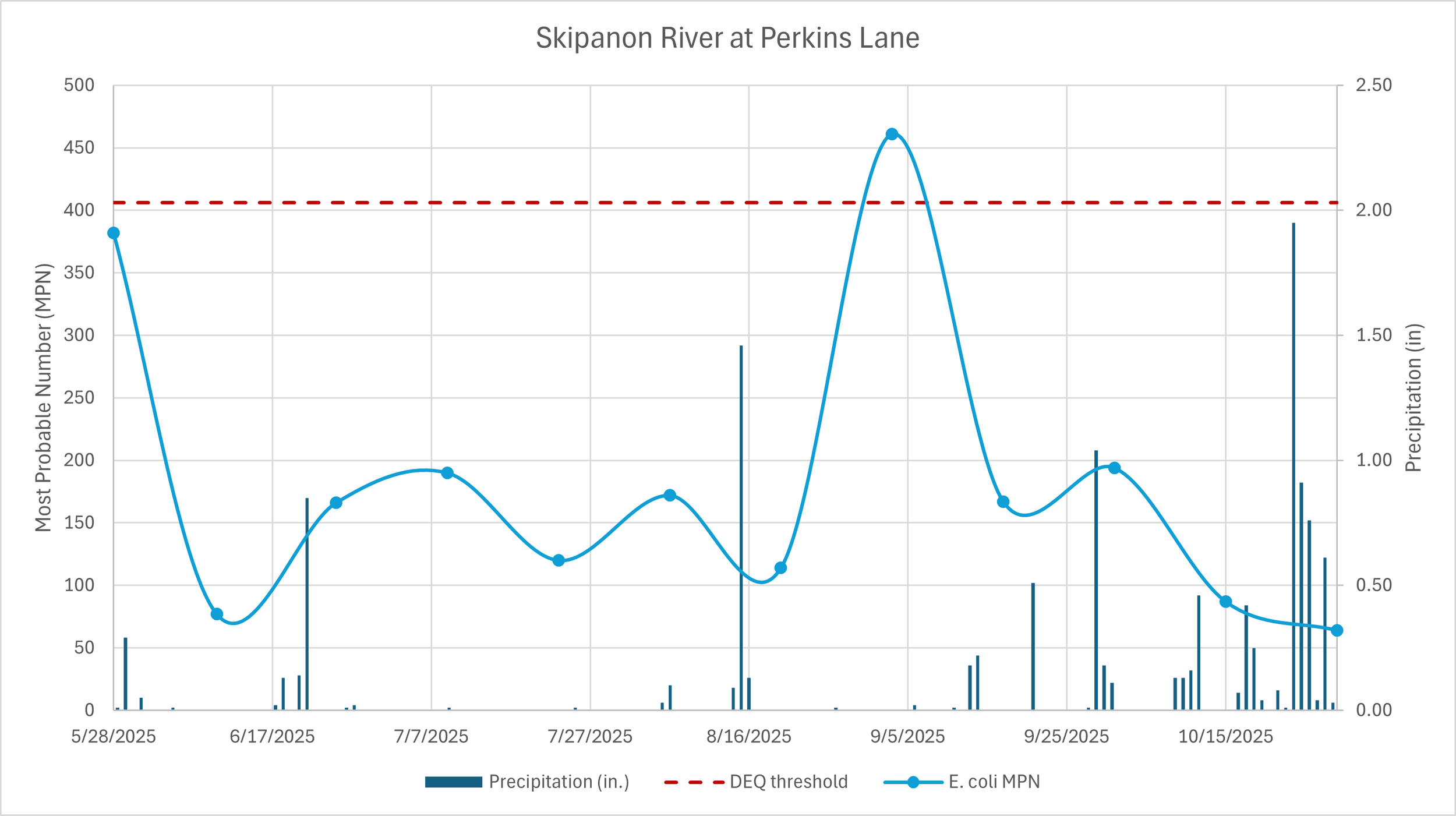
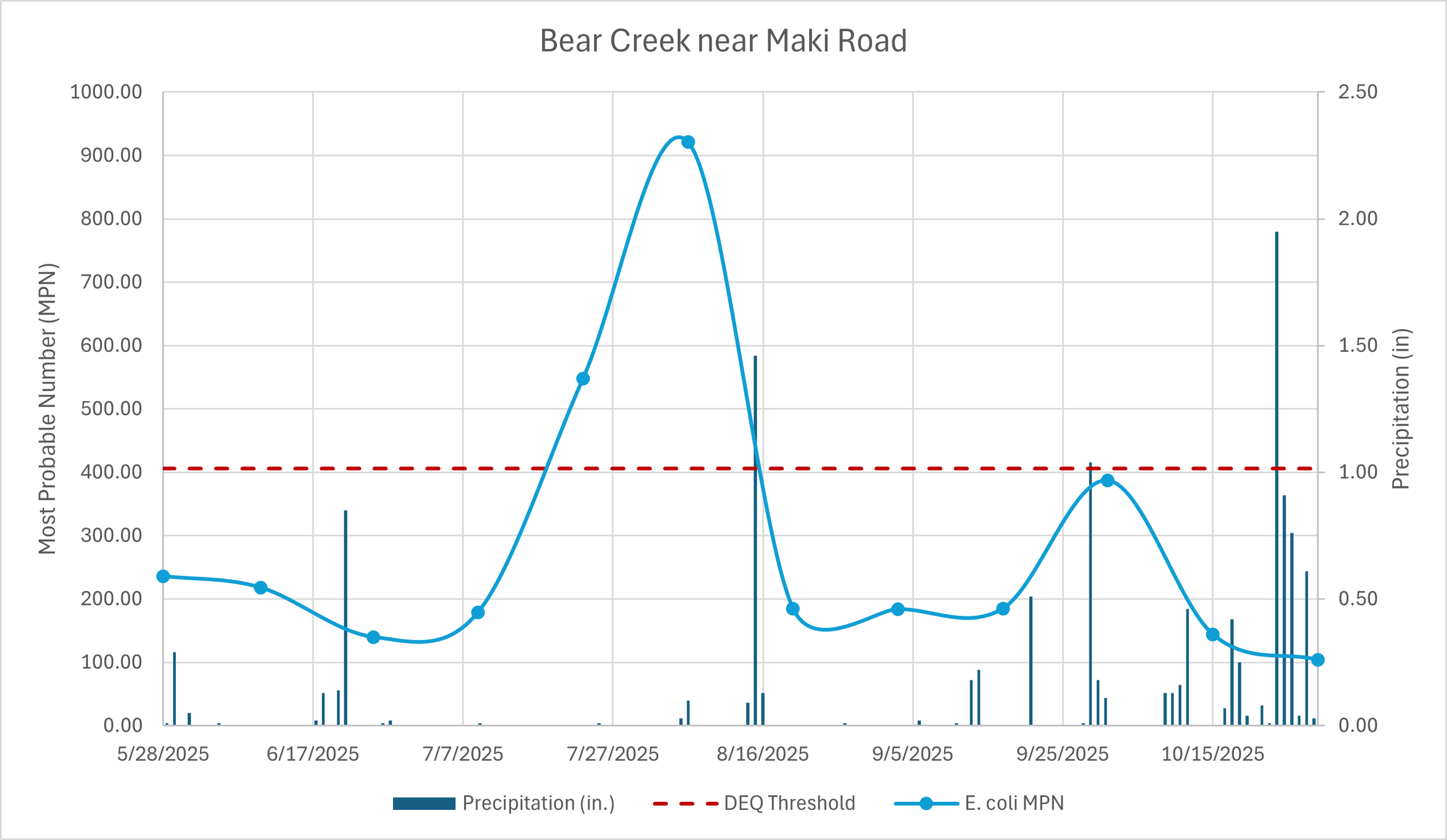
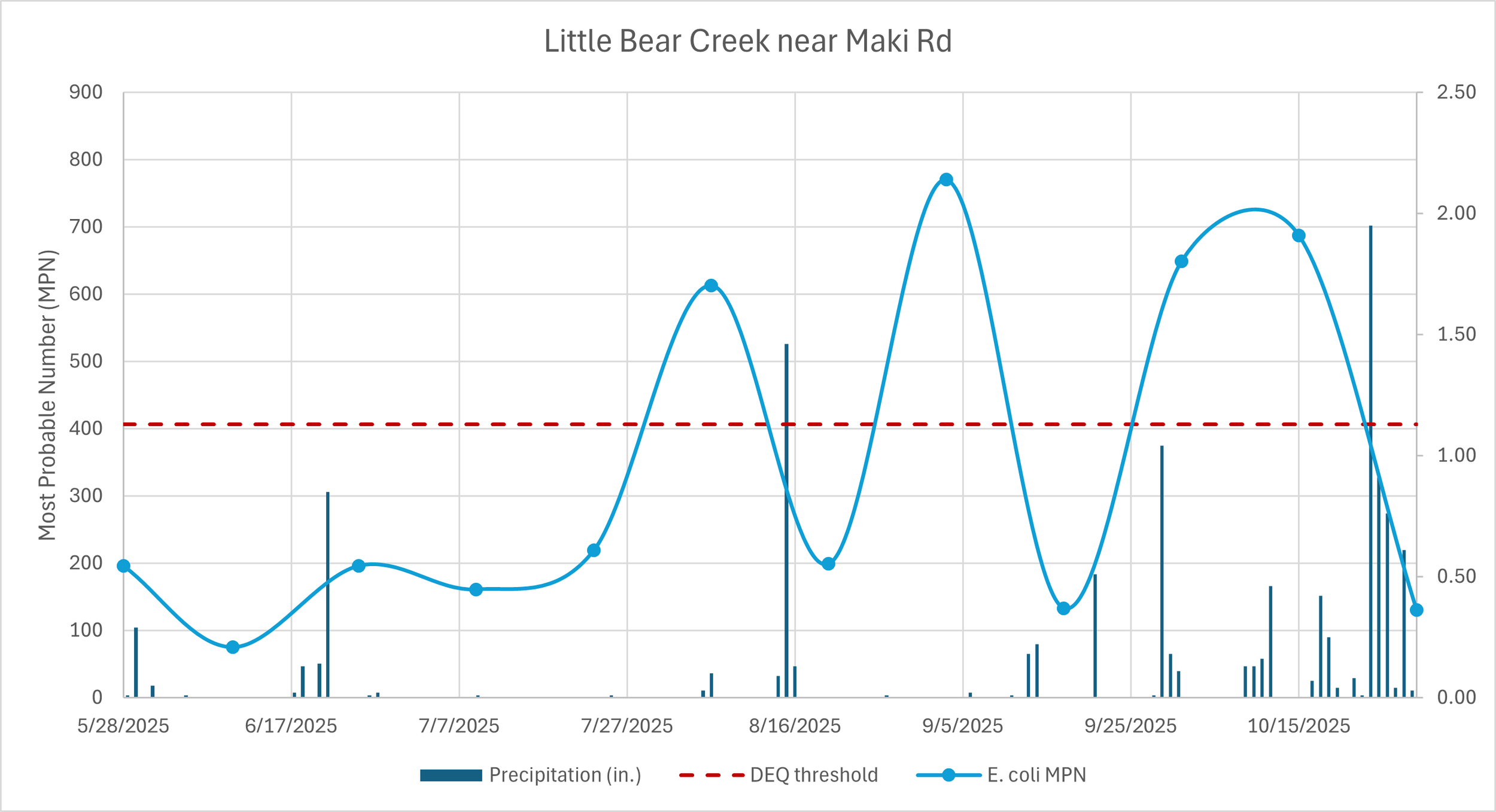
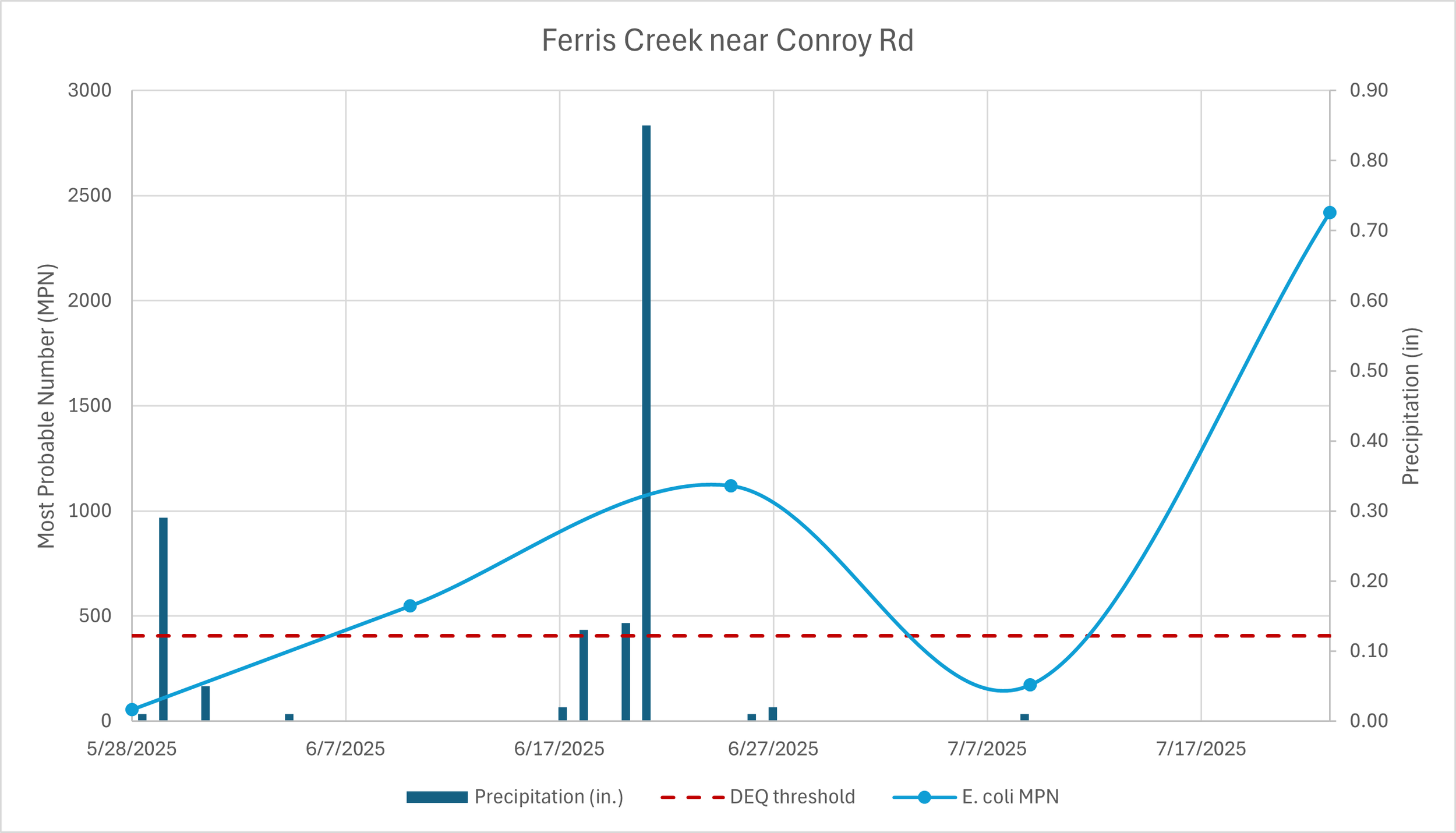
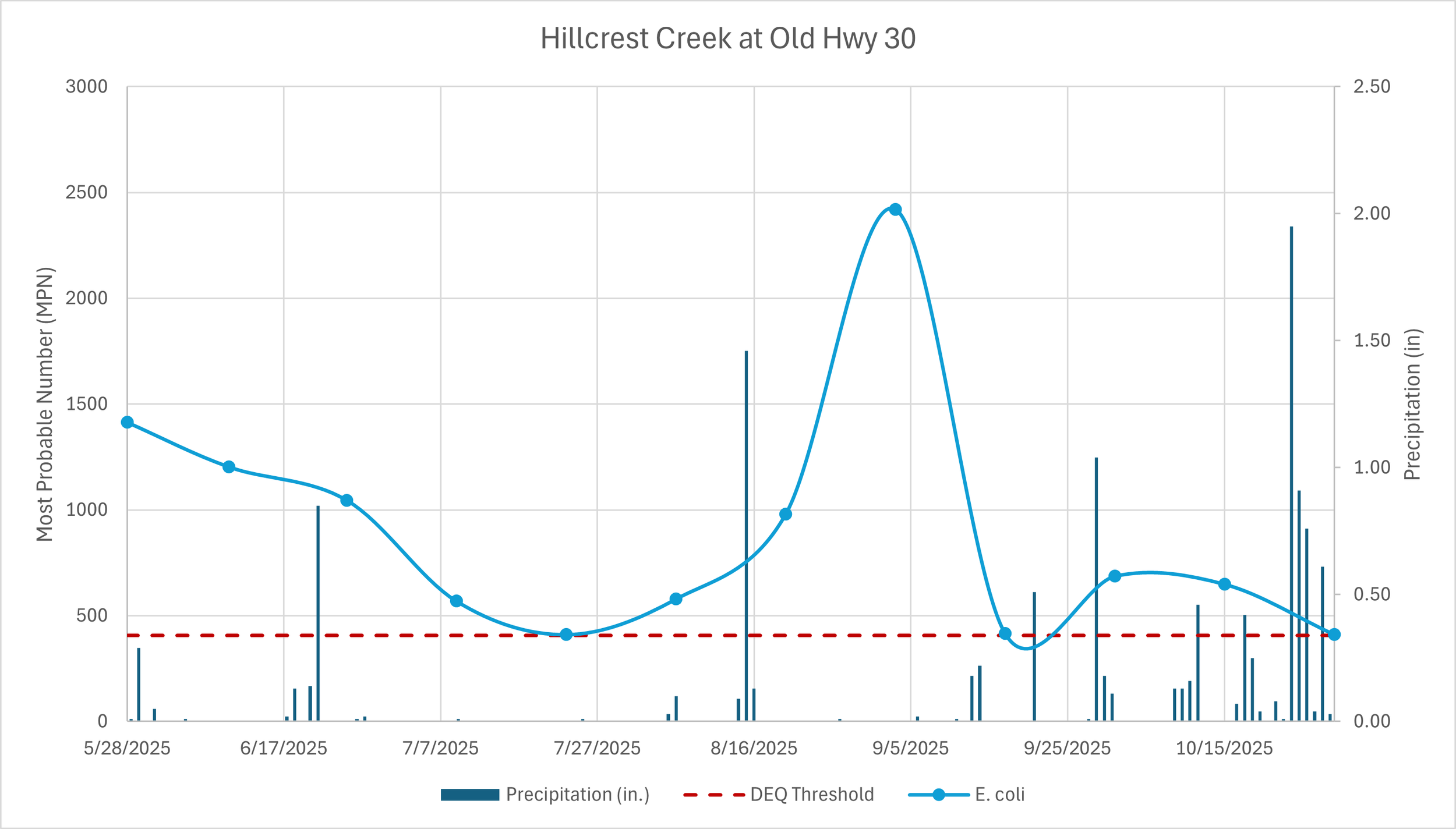
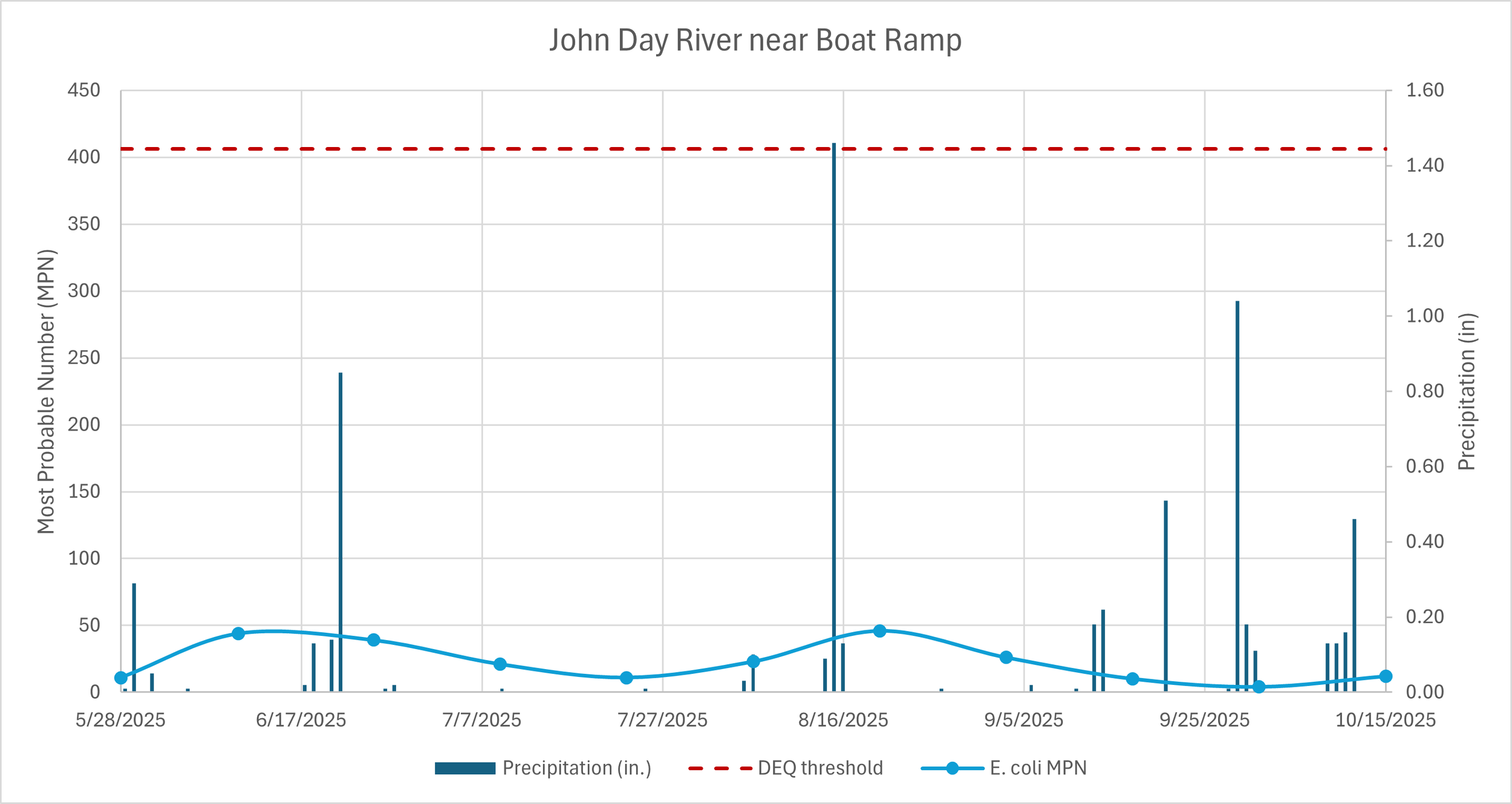
In 2025 the NCWA began testing for E. coli bacteria at 13 sites throughout our service area to help determine where there might be contamination impacting our local ecosystems. The amount of E. coli detected is measured as the Most Probable Number (MPN) of organisms in a 100mL sample.
below are the results of our 2025 e. coli monitoring efforts
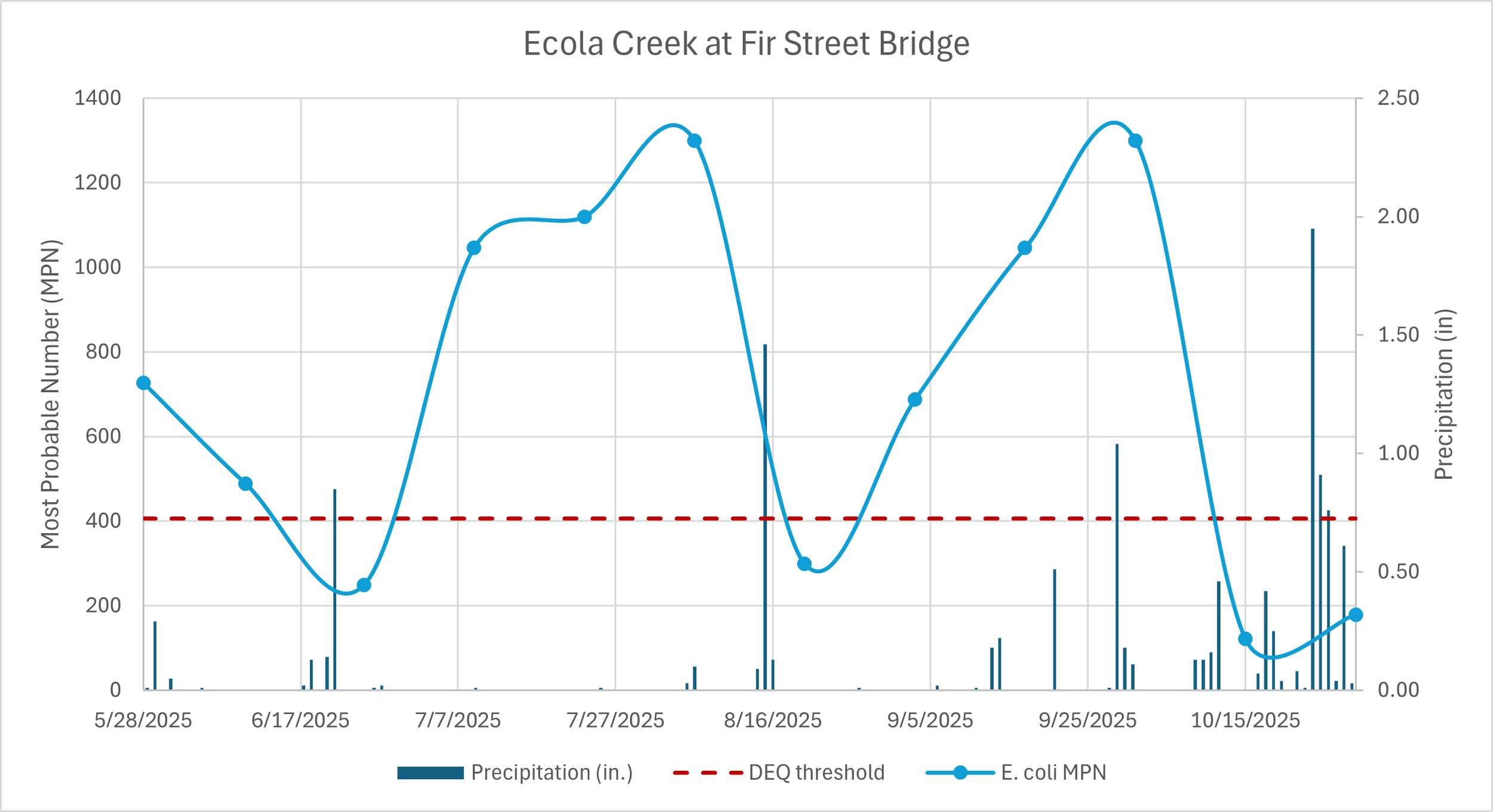
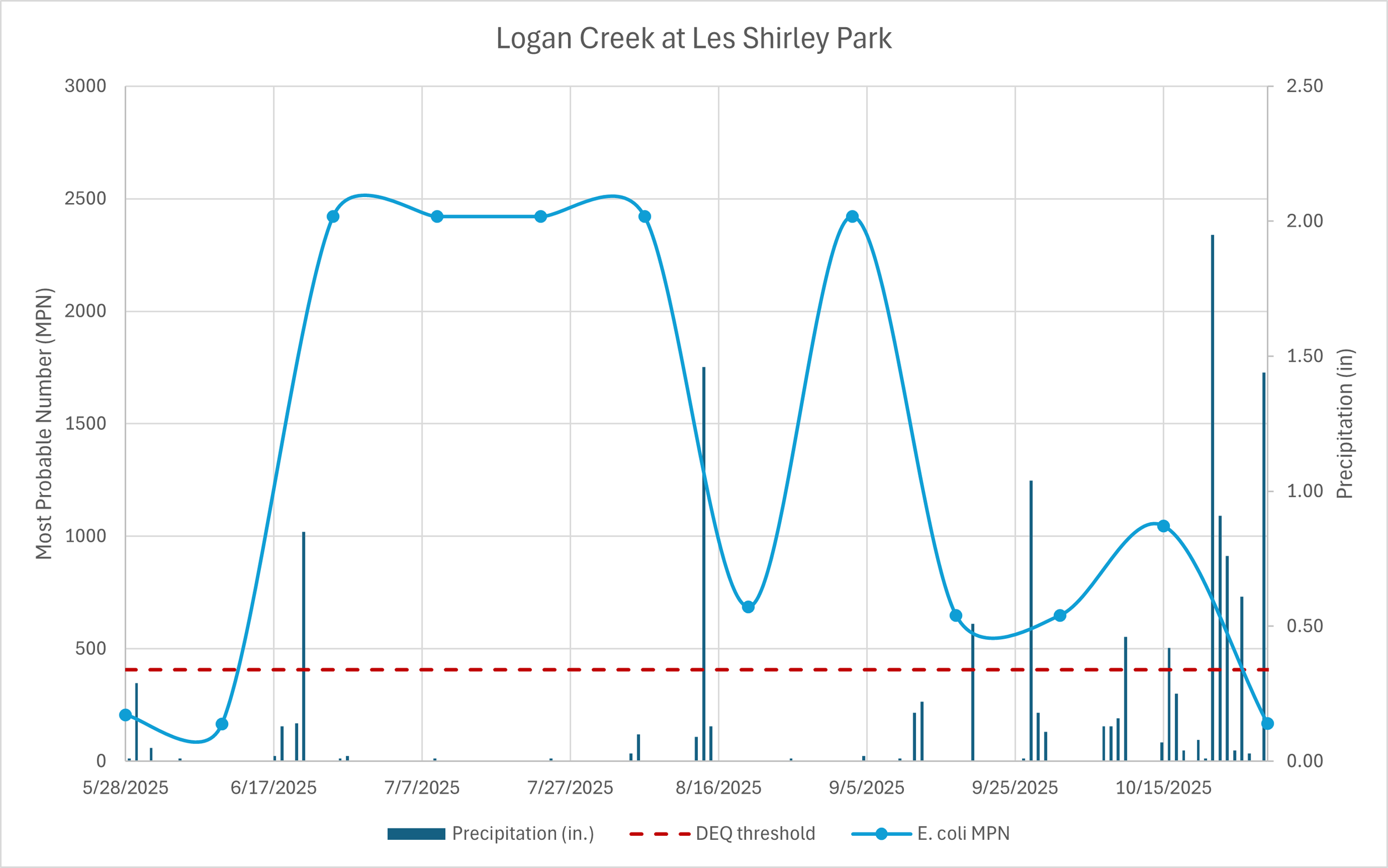
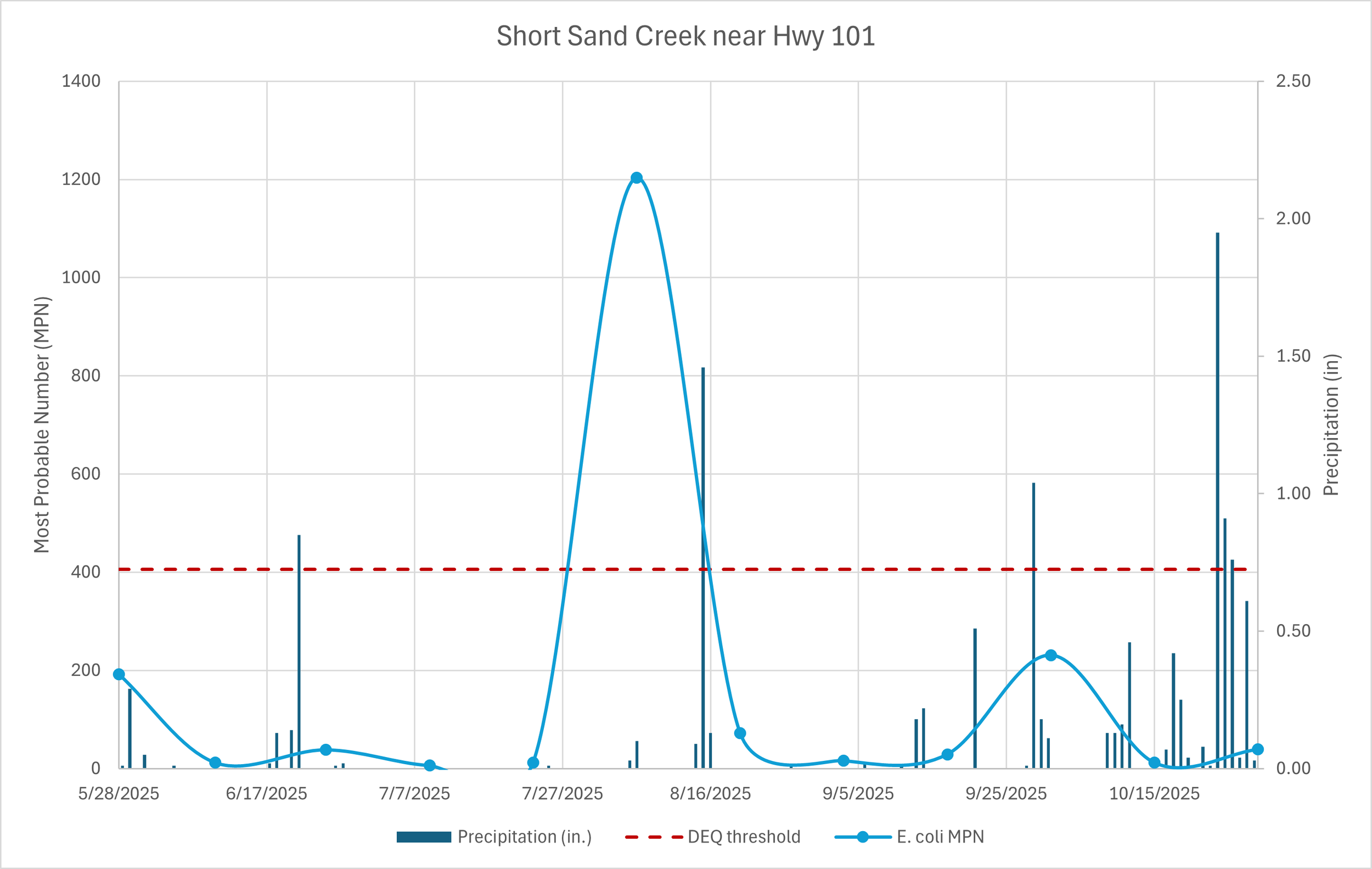
for more information about our bacteria monitoring program
Contact Kelli at kelli@northcoastwatersheds.org